Although the Maureen Bickley Centre for Women in Leadership is affiliated with the Curtin University, the ideas presented here are not necessarily representative of the policies and opinions of the University. If you have any queries about the Maureen Bickley Centre and what we do, please go to our website.
Showing posts with label violence against women. Show all posts

Friday, March 8, 2013

Happy International Women's Day! - March 8th

 
Happy International Women's Day! Today (March 8th), is a day of celebration for the achievements that women make in our societies and a day of reflection on the inequalities that still exist and areas in which progress is still to be made.


Yesterday, one of the Bickley Bloggers attended the UN Women International Women's Day breakfast, held in Perth, Western Australia.  Here are her reflections:
UN International Women’s Day breakfast in Perth, Western Australia is one of a number of events being held to celebrate International Women’s Day. Around a thousand women (and some men) attended the event the proceeds of which will help women victims of domestic violence in Papua New Guinea. We were reminded that one in three women worldwide experiences violence in their lifetimes. If those figures are horrifying enough we were then told that for women in Papua New Guinea the situation is so very much worse. Over two-thirds of women there report having been beaten by their husbands and that figure rises to nearly 100% for women living in the highlands. Two-thirds of women aged between 15-24 are forced to provide sex in order to survive. 
The keynote address was given by Rosie Johnson who is a Senior Magistrate in the Papua New Guinea Magisterial Services. Much of her work has focused on ensuring women and other vulnerable members of the community receive appropriate legal advice and support.
She spoke passionately about the need to end violence against women in Papua New Guinea. She highlighted the lack of resources that are available to women who are victims of violence. There is very little if any legal protection and almost no social support such as qualified social workers or counsellors. Rosie spoke of the need for technical support to help draft legislation and to provide the counselling and welfare that is needed as well as the need for money to help break the cycle of violence. She then recounted some of her own life story and the challenges she had faced and continues to face with respect to her own safety – it was a sobering reminder on the eve on International Women’s Day, 2013 of how much work still needs to be done to make the world a safer place for women.

What did you do to mark International Women's Day? We would love to hear about your experiences, updates on events that you attended, or initiatives that your company is leading.  Get in touch via facebook, twitter or email! 

Sunday, February 13, 2011

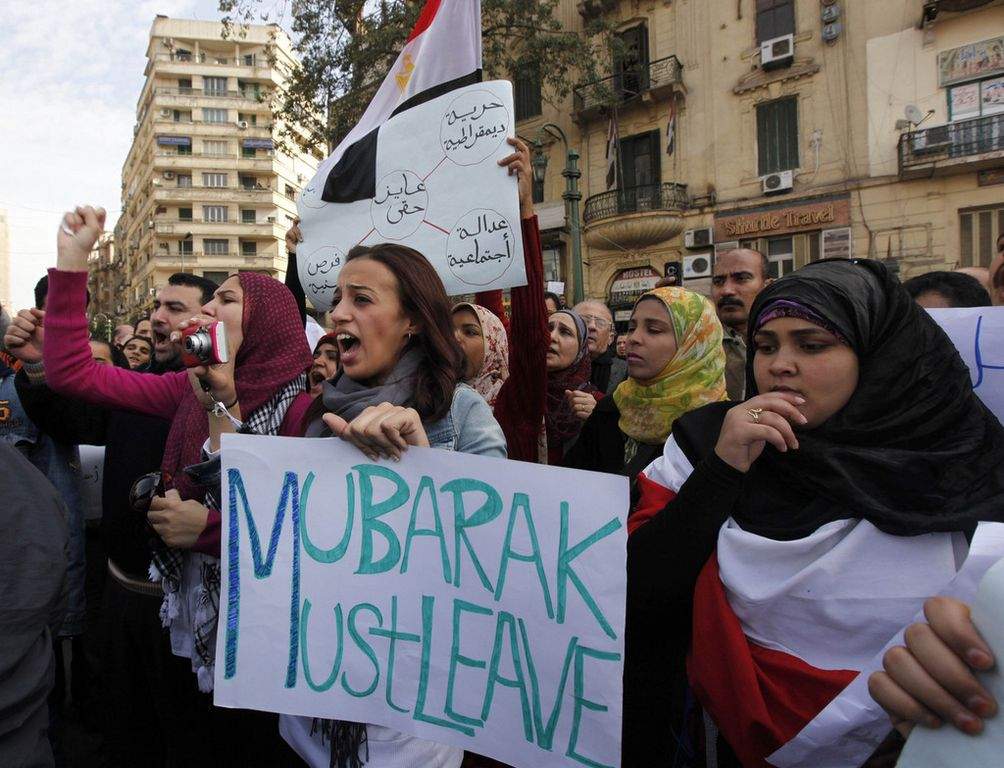
Women of Egypt Rise Up


The fight of the Egyptian people and the liberation of their nation from the regime of (now ex) President Mubarak has been inspirational. Women of the Middle East have been key to the protests and made their voices heard.  

How can we not be moved by these amazing and powerful women in action...

Source
Source
Source
Source 
Source
Source

Monday, April 19, 2010

New Books and Recent Reports

Some newly published books and recently released reports have caught our eyes at the Maureen Bickley Centre...

New Books
I was delighted to see that Fremantle Arts Centre Press has just published Lekkie Hopkins (a colleague from my previous university) and Lynn Roarty’s book about Pat Giles.


Pat Giles is known to many in Australia for her commitment to improving the lives of the disadvantaged. Among her many contributions and achievements she was elected as an Australian Labour Party Senator a role she held for twelve years. She was also an organiser with the Hospital Employees Union of Western Australia, a founding member and inaugural convener of the Women's Electoral Lobby (WEL) in Western Australia, the first woman on the executive of the West Australian Trades and Labour Council, Chairperson of the first Australian Council of Trade Unions Women's Committee and completed three terms as President of the International Alliance of Women.

Recently Released Reports
Three recently released reports caught our attention. The first is Changing Cultures Changing Attitudes - A National Survey on Community Attitudes to Violence Against Women released on April 7, 2010 by the Hon Tanya Plibersek, MP, Federal Minister for the Status of Women. Although the report noted some gains in that attitudes about violence against women are changing for the better significant challenges remain and violence against women remains a major issue. The full report is available here. I also think we need more research to show the impact of violence on women’s work and their careers. Let us know if you are aware of research being undertaken in this area or any relevant reports that have been released.

A second major report is Women in Science in Australia: Maximising Productivity, Diversity and Innovation by Professor Sharon Bell which was released by the Federation of Australian Scientific and Technological Societies in October 2009. The report shows that women’s progress in science over the past 15 years has stalled despite improvements in their participation rates at undergraduate and post graduate levels. The report highlighted persistent structural barriers to women in senior positions in science and technology, female professional scientists earning less than their male counterparts and harassment and discrimination continue to be major issues. The full report is available through the FAST website. This report is particularly timely given Australia’s focus on skill and labour shortages. However, one wonders how many research organisations and funding agencies will rise to the author’s challenge to change their practices including the need for improved flexibility and a range of career paths that have as a central focus the attraction and retention of women. It will be an interesting space to monitor for change!!

The third report that captured our attention (perhaps no surprise we are located in a graduate school that has an MBA as one of its major programs) was Catalyst’s report Pipeline’s Broken Promises - a second report from their longitudinal project, The Promise of Future Leadership: A Research Program on Highly Talented Employees in the Pipeline.

The project surveys graduates of leading business schools in the US, Canada, Europe, and Asia and highlights the differences in women's and men's career experiences and satisfaction. It challenges the myth that women just haven’t been in the pipeline long enough and that this is what explains their absence in senior roles and the persistence of the gender pay gap. Of concern for women is that despite women’s increased participation in education and employment inequality remains entrenched and that women from elite MBA programs lagged men in terms of career advancement and salary from their first appointment following graduation. Perhaps not surprisingly women were also less satisfied with their careers. The full report is available from the Catalyst website. What are your thoughts on how organisations and for that matter universities teaching MBA programs might address this issue of gender inequality?